Going Through My Archive of Personal Influence
These are a few of my favorite things… Also check out my Substack!
Fashion is one of the most subjective ways in which we express ourselves. It represents inspirations, backgrounds, values, and ultimately a sense of self. It stems from influences you may never have deemed impactful, or even remember.
I have been thinking a lot about the notion of fashion and its origins. Bella Freud’s podcast Fashion Neurosis came onto my radar recently. I have been loving her podcast, for she emboldens her guests to explore where their sense of style comes from. It caused me to question my own timeline and what I was inspired by.
My mother and grandmother have always been shoppers; I consider it a genetic disposition that I have always been inclined to shop. I grew up spending afternoons in department stores, my free time spent grabbing lunch and scanning the racks with friends. It still is my favorite activity.
I wanted to trace back what has influenced my sense of style to this day. I called my mom and spoke about my deepest childhood obsessions, often a film, music, and books.
From a young age, I was enraptured with movies. I idolized Disney princesses, and it is apparent (in hindsight) that I have always been a hopeless romantic. I loved Sleeping Beauty and her pink dress, her blonde hair, and brown eyes ( I hoped I resembled her in some sense). I adored Cinderella, her humble beginnings, and rags-to-riches story, and with Cinderella, I found a special kinship, for my dad adorned me the nickname “Sopharella” as a little girl. I had a pink princess dress that was essentially plastered onto my body. I wore it all around the house, and on our family vacations to Disneyland, I wouldn’t have been seen without it. Disney princesses are a classic part of so many young girls’ childhoods, whether it be the fairytale or the fashion.


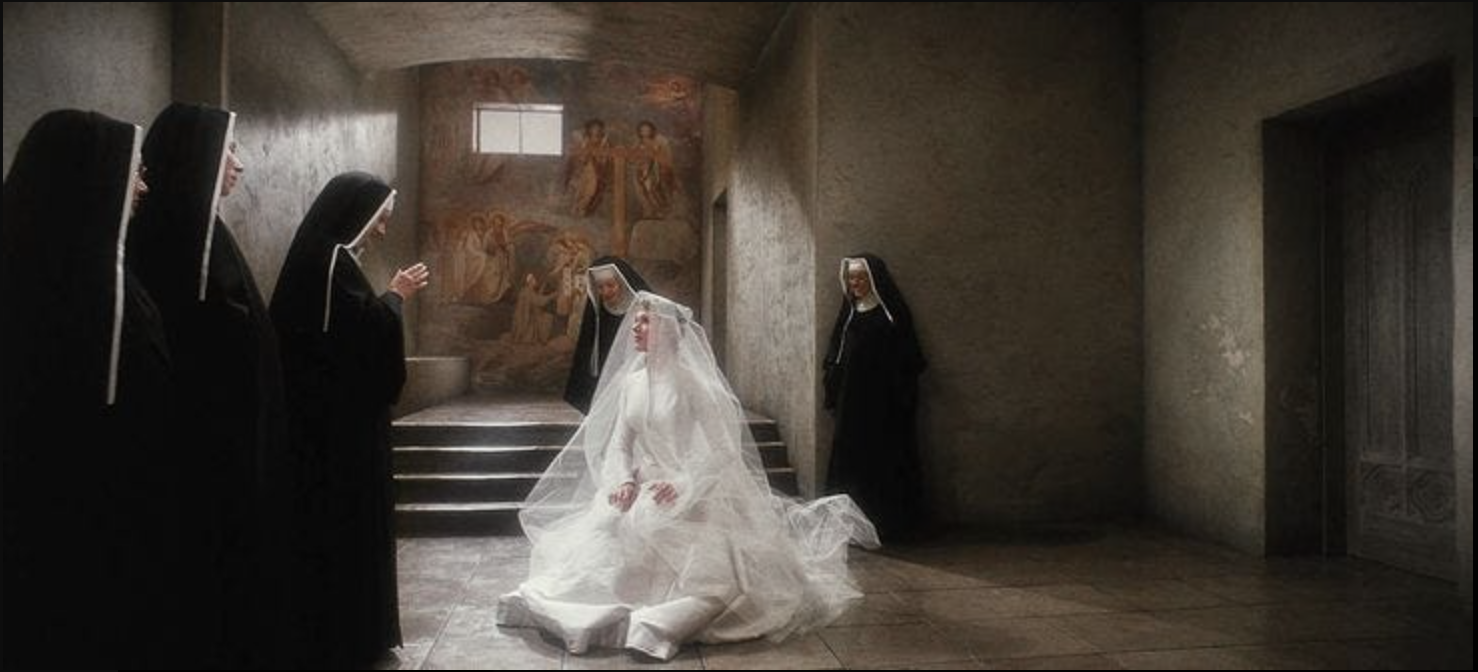
The Sound of Music is the film that shaped much of my perspective on movies today. It opened the door for me to the joy that films offer. It was my favorite movie from the moment I saw it, which was around the age of 3. We have home videos of me bouncing up and down to the chorus of “Do Re Mi” and singing “My Favorite Things” with my mom. The film is rich with beautiful settings and songs, while highlighting the fashion of the day. I loved Maria and her craftiness with the curtain ensembles, and the floral dress with the fitted bodice she wore to dance with Captain Von Trapp. Her wedding dress is one of my favorite bridal looks I’ve seen in a movie. The Sound of Music made me fall in love with history despite its complications, but even more so, the fashion.
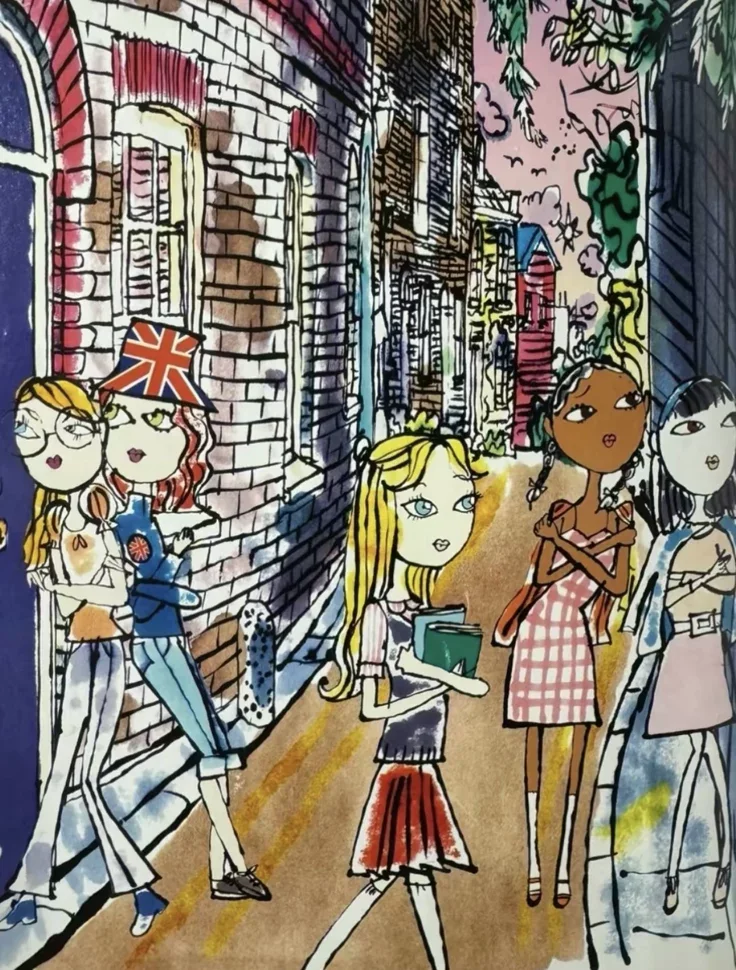
I read the books of Fancy Nancy, The English Roses, and Eloise, all of which were centered on undertones of fashion and culture. Fancy Nancy demonstrated the power of confidence and being true to yourself, using words like “posh” and “stupendous.” Her feather boas, sparkles, and frilly socks were all a source of inspiration, yet her room is what I truly desired. It featured an over-the-top canopy bed with a heart-shaped pillow, fuzzy rugs, and even a matching bed for her doll. The English Roses, a book written by Madonna, surrounds a group of chic little girls who all have the best outfits, and their journey in learning not to let jealousy prevent inclusion, and most importantly, the power of perspective. Speaking of jealousy, their dolls, hats, and cute skirts were all I wanted (and still do). And last but never least, is Eloise, the classic story of the girl who lived at the Plaza Hotel. This book is what I credit as the beginning of my infatuation turned deep love of New York City. Eloise, to me, was an it girl. She had a British nanny, a cutsey pug named Weenie, a silly turtle named Skipperdee, and lived in a glamorous hotel. I loved her so much that when my aunt was pregnant, she asked me what her daughter’s middle name should be, so I answered with Eloise, and so it was.
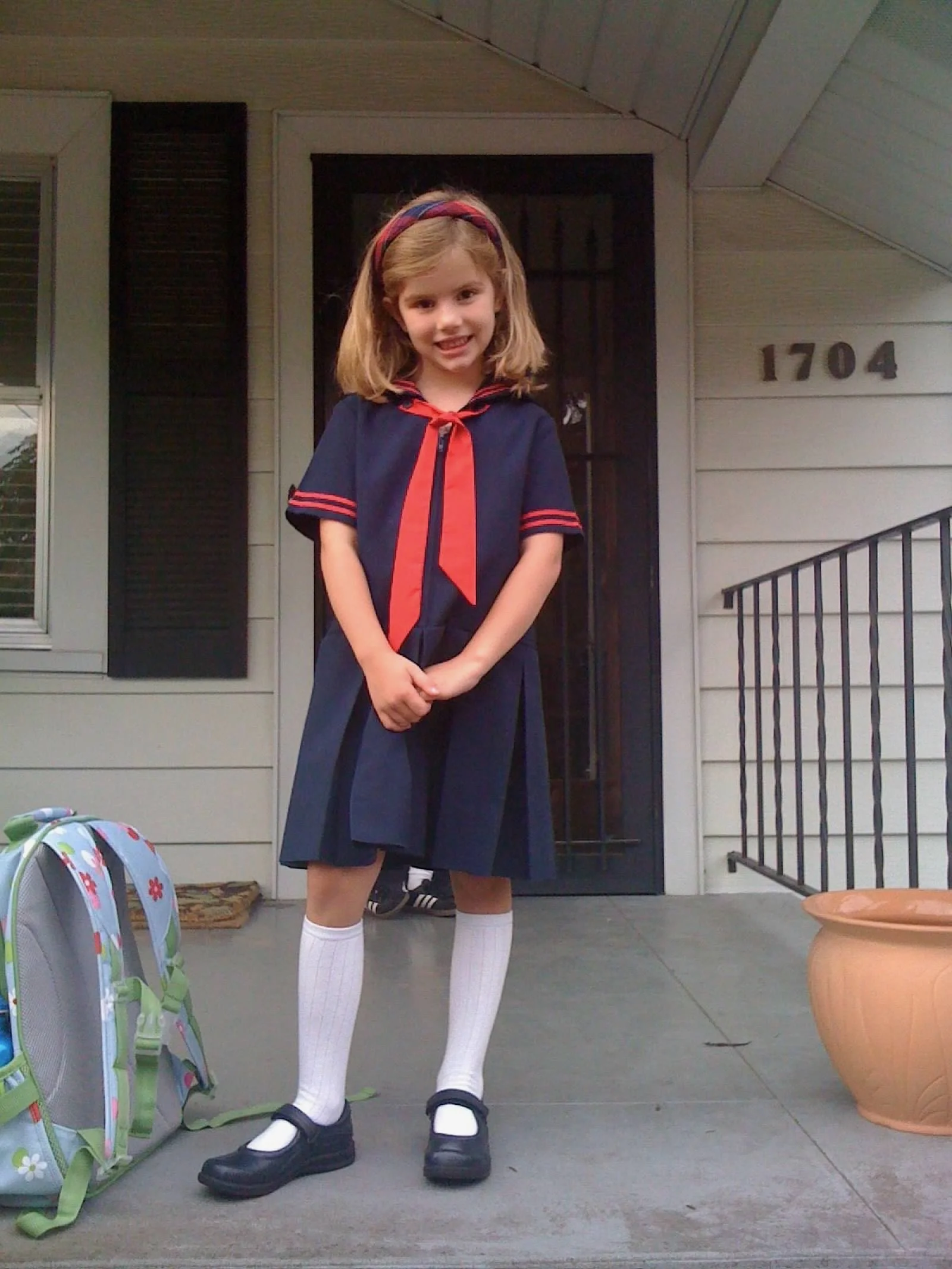
School uniforms were a big part of my childhood. I wore the colors red and navy for close to ten years of my life. I donned polo shirts, plaid skirts, and sailor dresses. It wasn’t until I read Alexa Chung’s book It that I realized the impact uniforms had on my personal style. In her speaking about her experience in wearing uniforms, and I reminisced about my own. In some strange way, I think it allowed me to focus more on who I was as a person, rather than having it be dictated by who had the most popular outfit (thinking about all the clothes I wasn’t allowed to buy from Justice). Uniforms taught me the importance of accessories and accessorizing, and established my love of bags. I can vividly remember my first backpack, with a shade of powder blue, a 2000s floral print, topped off with a green trim. I loved the personality my backpacks could showcase, thus I switched them year by year. I would wear a variety of barrettes and experiment with headbands and bedazzled hair ties. Yet, my main takeaway is that uniforms created a respect for classic styles, the idea that a skirt and polo, or a tailored dress, never truly go out of style. It taught me that modesty can be sophisticated, and that you can look cool without having to bare too much skin (not that I’m opposed to that).
As I got older and began to age out of my Disney Channel days and phase into a slightly more mature subset of pop culture, my mom introduced me to the rom-com. I can vividly remember the first time I watched 13 Going on 30, the tale of a young girl who desperately wants to grow up, a feeling I 1000% related to. It seemed so cool, and SO glamorous to be an adult. I longed to be a journalist who falls in love with a smart, handsome, and earnest leading man (I’m looking at you, Mark Ruffalo) and goes out to dinner with her friends. My mom also showed me my first Nora Ephron film, Sleepless in Seattle. This first introduction to rom-coms not only made me yearn for the notion of adulthood and falling in love, but also the ability to dress like an adult woman. I wanted to wear heels, own a trench coat, mini dresses (i.e. Jenna Rink), but also big sweaters, loafers, and classy suiting (i.e. Meg Ryan).
This propelled me into a fixation on fashion found within television and movies, and finding characters that resonated with me. Characters included Rachel Green from Friends and her ability to make just about anything look good, and also her hair (I am forever inspired by Jennifer Aniston’s hair). Arguably, both of the Gilmore Girls offered new ideas of fashion for me; their playing with chunky sweaters, baby tees, tight jeans, and the best early 2000s fashion. One show that I fell in love with, which highlighted the best understated style, is Felicity. To this day, I look for her perfect tan leather backpack, and my own Ben Covington.
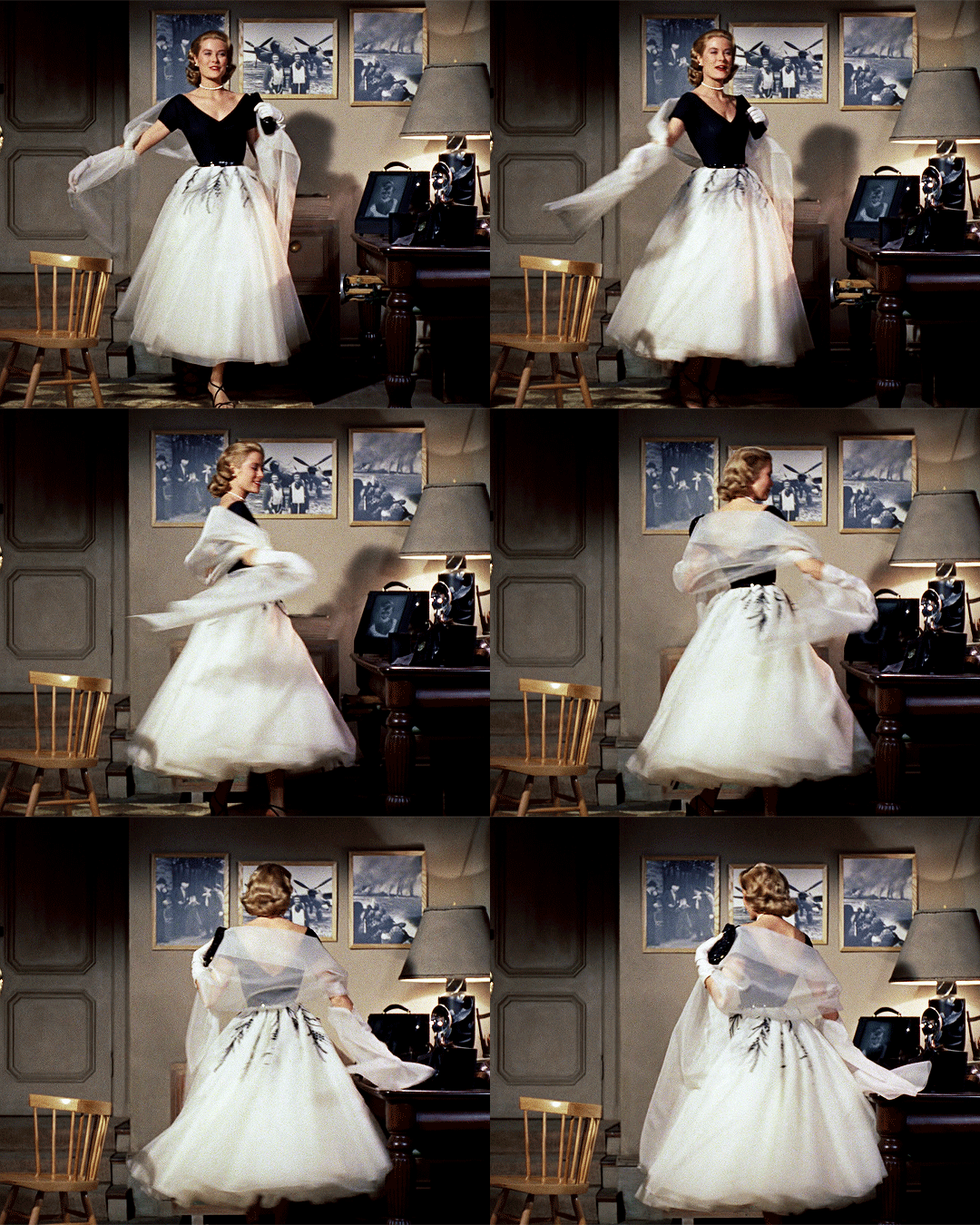
At that same moment in time, my dad introduced me to Alfred Hitchcock. We watched Rear Window, To Catch a Thief, and Dial M for Murder, all featuring the glamorous Grace Kelly. She became an ultimate style icon in my book. It went beyond the clothing she wore, but also how she carried herself. She had a quiet elegance that exuded from her on-screen personas. I became so obsessed with this American actress turned Princess of Monaco that I dressed as her for Halloween. I scoured the internet for a way to dress like her character in Rear Window, finding a black dress and tulle petticoat that did the trick, even though I wasn’t half as glamorous as Grace Kelly.
Arguably, the next point in my life, where I transitioned from tween to teen, was when I truly discovered fashion. I was so inspired by everything I interacted with; hence why some of my outfits were a mish-mash of styles, and often ended up looking both matronly and juvenile. Yet many of these facets of what inspired me still do to this day.
I can remember watching Pride and Prejudice, Emma, and Sense and Sensibility for the first time. These stories threw me into the ideas of elegance and wit. I later read Pride and Prejudice, and it depicted that style trumps fashion, and style is also expressed in how you act. Elizabeth Bennett charmed Mr. Darcy with her wit and willingness to stand her ground. Emma Woodhouse attracted Mr. Knightley through their playful friendship and, ultimately, through her ability to grow from her mistakes. Elinor Dashwood and Edward Ferrars fell in love because of her openness, honesty, and being her true self. While I fell in love with the refined essence of 19th-century styles, these stories illustrated that fashion is only a small part of style, and that individual style is at its best when it allows personality to shine.
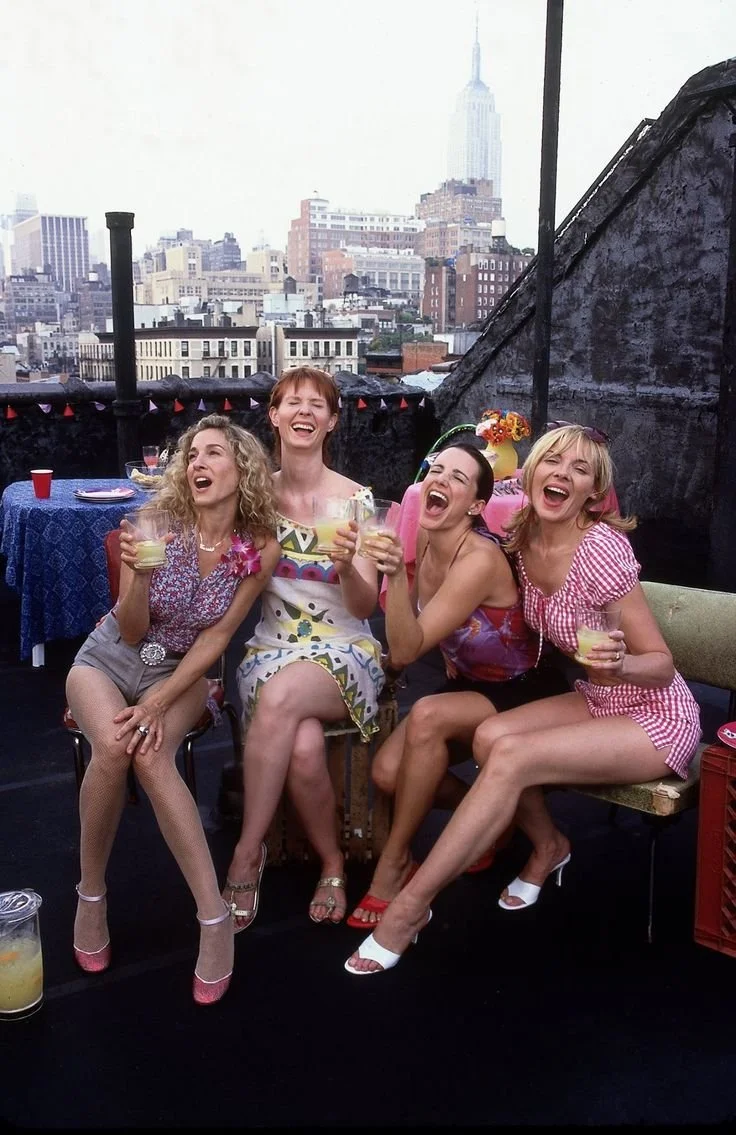
Sex and the City came to me in my freshman year of high school. It is a show my mom always loved, and I was desperate to watch it for as long as I can remember. It’s hard to describe how big an impact this show has had on me, how often I think about it, and how much it inspires me daily. It was what introduced me to real fashion. This show taught me what a Manolo Blahnik is, the importance of John Galliano, the concept of a Fendi Baguette, the significance of the Chloè Horse Pant, Thierry Mugler, THE Vivienne Westwood, and countless other designs and designers. I can’t even tell you the number of times I’ve watched this show. It has become the ultimate comfort watch. It seems silly to say this show inspired me to want to move to New York, for there are probably a million other girls who would say the same thing. Sex and the City presented New York in a way that I hadn’t seen before, meaning it was actually filmed in the city. The locations were real and not just set on a sound stage (apart from the girls’ enviable apartments and diner sequences), and it exhibited life in a big city, and a dream I could aspire to. I would be remiss to say this without mentioning that Sex and the City is one of the big reasons for gentrification in the West Village. This is a central focus in the now-infamous “It Must Be Nice to Be a West Village Girl” article written by Brock Colyar for The Cut. She writes, “The neighborhood has, in recent years, transformed into a fabulous theme park for young women of some privilege to live out their Sex and the City fantasies, posting and spending their mid-20s away.” While I don’t live in New York and haven’t frequented the West Village more than a handful of times, based on social media, this backhanded remark is true. In the article, Colyar explains their uniform of sambas, a white tank top, and jeans, essentially calling out their basic looks. I would argue now it is ballet flats over sambas (which I am not opposed to). This article was harsh, but it also calls into question the inspiration of the “West Village Girl.” To me, Sex and the City highlights fashion individuality; while the main characters are representative of tropes, they all have unique and defined styles. Sex and the City features going to brunch with friends, Cosmos, and hooking up with men all over the city, but that’s just the surface level. The show delineates the importance of friendship, the pitfalls and mistakes that come with relationships, and that fashion should be personal. Carrie Bradshaw’s fashion is inspiring because it can’t be replicated, and because it is true to her character. It proves the concept I’ve always believed in: the coolest people are the ones who are themselves.
I will forever and ever be a fan of Sex and the City, and I will always be inspired by the women in that show and the incredible fashion. Thank you so so much to the fab Patricia Field.
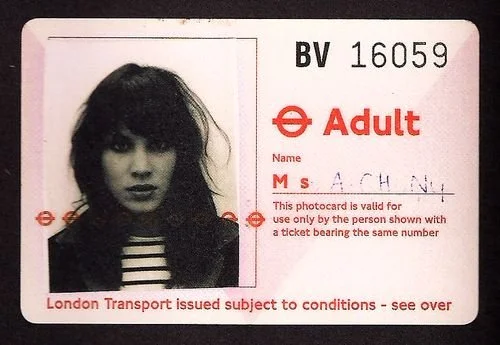
Moving on to a more modern reference, the one and only Alexa Chung. I can’t exactly pinpoint the moment I first found out about Alexa Chung. I do remember watching her Vogue Beauty Secrets on YouTube, and being in awe of her casual coolness. In the video, she left her hair a tad messy and proceeded to pair it with the most perfectly drawn cat eye. Her go-to look has always been a t-shirt and jeans, and she is the epitome of a modern rockstar girlfriend who is arguably cooler than said boyfriend. In reading her book It, I felt seen in regards to how I view fashion. She loves to wear suiting and vintage tees that lean masculine, and at the same time, fashioning babydoll dresses and cute flats that display her femininity. I feel I do the same in my own fashion practice. Some days I desire to dress ultra feminine, and others play more towards masculinity. Her idols include Jane Birkin, Kate Moss, Charlotte Rampling, Mick Jagger, and Anna Karina, along with others who are equally as cool and important. She exemplified that you can exist in two realities and still be deemed both sexy and cool. She is a true it girl.
“This is Penny Lane, man. Show some respect.” Cameron Crowe’s Almost Famous is one of my all-time favorite movies. The grittiness of the 70s and the beauty of the music are what make this film so amazing. How can one not be inspired by the fashion of Penny Lane? The Afghan coat, lacy crop tops, perfectly curled hair, and wedge sandals. Her tackle box purse.
Bridget Jones’ charming clumsiness and granny panties are just two of the reasons she is one of my favorite rom-com protagonists. She is funny and juvenile, but sweet and smart. She can pack a punch: “Thank you, Daniel, that is very good to know. But if staying here means working within 10 yards of you, frankly, I'd rather have a job wiping Saddam Hussein's arse.” And ultimately has the rom-com ability of making anything normal look cool. Her leopard thong and blue cardigan, her head scarf that soon goes missing, and her famed bunny get-up are some of her best looks. Yet once more, it’s her cleverness that allows her to sparkle.
High Fidelity is the epitome of when music and fashion come together to create something great. I always loved Zoe Kravitz, but watching this show in COVID when it first came out felt as if I had unearthed a rare and precious gem. The reason the fashion is so successful in this show is that it is realistic. The central character, Rob, in many ways emulates Zoe. I watched and rewatched this show in great detail, studying her outfits like a star pupil. Her closet included perfectly faded vintage band tees, thick sweaters, denim you can only find in a curated vintage store, and a worn-in pair of chunky heeled black boots. In the show, Rob would wear an oversized Bob Marley white tank, turned dress, with said boots, which is a look I am convinced only Zoe Kravitz could pull off (and I implore you to Google search). There is no other descriptor than the word cool.

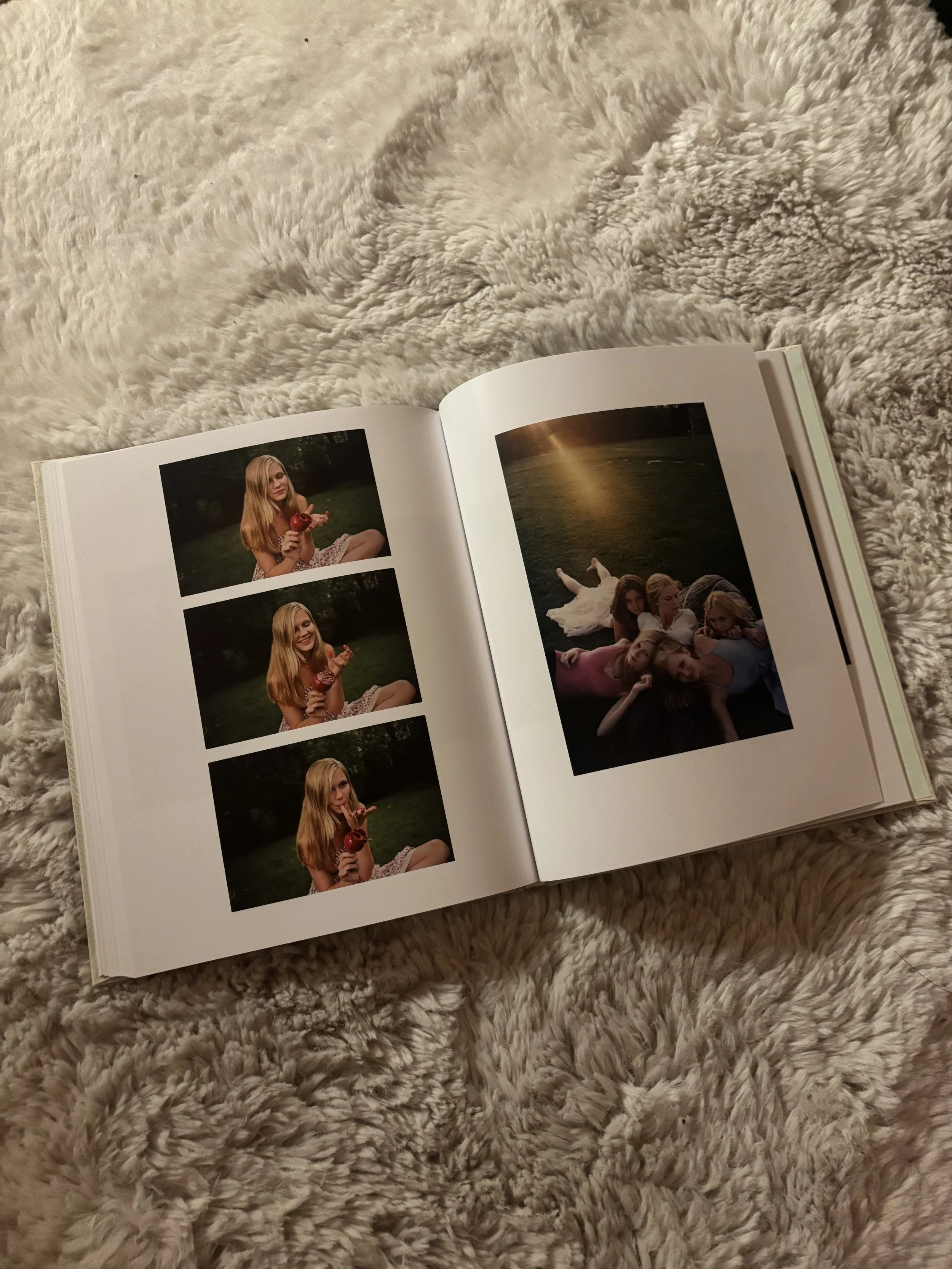
Lost in Translation, Priscilla, and The Virgin Suicides were films I first watched in college. I had known about Sofia Coppola, and had seen Marie Antoinette at a showing in History Club at my all-girls high school. I knew of her in the way that I understood she had a love of history, a strong sense of fashion, and an undertone of punk. Her aesthetic is what she is known for; she understands how to depict the complicated feelings of a teenage girl, as seen in many of her films. The Virgin Suicides has become one of my favorite films. I love it for its beauty, its juxtaposition of innocence and darkness, and for the fashion. The 70s cap sleeve dresses and school uniforms, lacey white bras, and pastel pink bed covers. Crucifixes and rock albums. Smoking weed and blowing bubble gum. As I got more involved in her films, I got more interested in her. I learned of her involvement with X-Girl (a brand started by none other than Kim Gordon), producing a fashion show outside a scheduled Marc Jacobs show, ultimately hijacking the press opportunity for a punk moment. Chloe Sevigny even modeled. Along with that, her infatuation and history with Chanel, and her long-standing friendship with Marc Jacobs. One of my best Christmas gifts was her book, Sofia Coppola Archive.
In looking back, I think I am most drawn to fashion that tells a story. I reach for fashion that describes who is wearing the clothes. Personality is essential; you can have a cool outfit but be boring as a brick and nullify the whole thing. All in all, it is most important to take what inspires you and find a way to fashion it into your own story.