
Having Style Trumps Being Fashionable
When you look at the best designers, they themselves often aren’t dressed in a way that seems particularly fashion-crazed, or like they were torn from the pages of a magazine. Most are understated, and their true style is rooted in what they put out.
This translates to the notion of taste. An influencer or a model might be very fashionable and look stylish in whatever they wear. They are surrounded by fashion, by the hottest designers, the biggest names, butthis does not mean they have style.
I had a meeting with one of the professors I became quite close to during my last year of college. We were chatting, notably about my love for fashion and how utterly fascinated I am by it. She gave me the biggest compliment by saying it came through in my advertising analysis in her brand strategy course.
From there, we talked about personal branding and how it should be consistent in everything you do. And then she said something that I think of daily.
“Having style trumps being fashionable.”
Maybe this isn’t some new idea; I know it isn’t, but it shifted my perspective on what it means to be fashionable completely.
In a world of rapid trend cycles that shift from day to day and where social media is all-consuming, it is hard to be original. Yet personal style isn’t solely about originality. The reason having style is different from being fashionable is that it is not formed from an attempt to be cool or to fit the current trends. It is about what works for you, your aesthetic, and your body type, and is based on influences that are personal to you.
Those with a rich personal style are the coolest people. When I think of people with incredible personal style, I think of the late great Diane Keaton, Alexa Chung, Jane Birkin, Zoe Kravitz, and Paloma Elsesser. Someone like Jenna Lyons or Chloe Sevigny, influencers like Philippa Parnevik, Ruby Lyn, and characters like Carrie Bradshaw. While they are certainly fashionable, their personal style is entirely their own. It seeps from their pores; it is hard to achieve. Many others fall into this category as well.
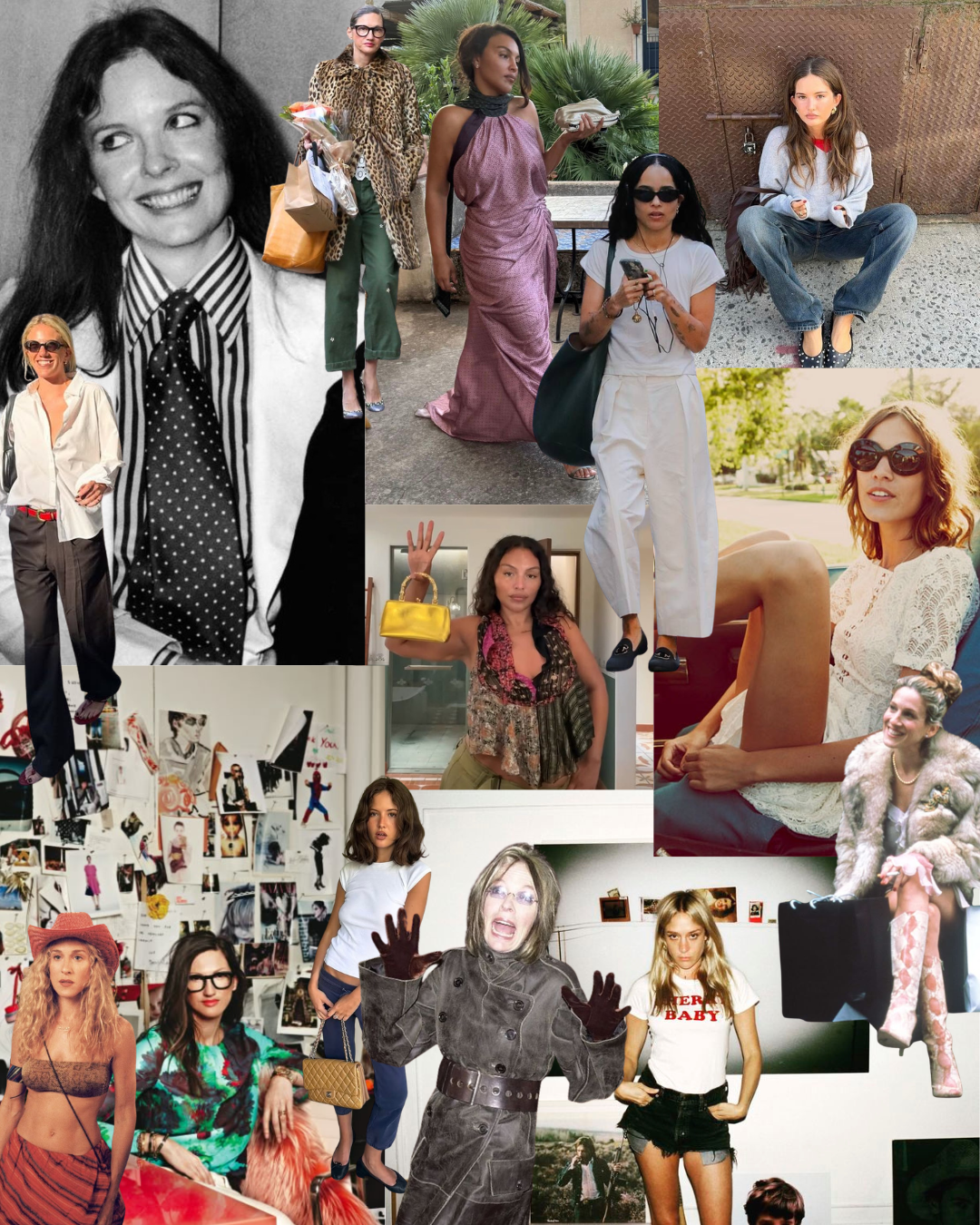
Diane Keaton wore suits, high-waisted pants, buttoned-up to the collar shirts, and lots and lots of hats. The way she put together classic pieces is what made her style interesting. Chloe Sevigny has always been all about girly punk. Ruby Lyn plays with vintage and leans into dressing tomboyish. Paloma Elsesser highlights young designers and mixing vintage and archival pieces. Alexa Chung, indie sleaze queen, loves boyish outfits and babydoll dresses. I could go on and on.
Alexa Chung stated in an interview with The Talks, “If it all feels completely authentic to you, it’s great style.” She has spoken about not wearing things just because they were popular within the public sphere. It’s about finding your own influences that are truly based on your interests, not what is popular or, in today’s case, trending on TikTok. This could even mean taking what’s popular but making it your own.
This made me realize that establishing a personal style and truly embodying it is A) what sets you apart and B) what makes you transcend just being fashionable.
I think it is so much cooler.
In my own attempts to define a personal style, I focus on styles that I feel confident in and look for inspiration in specific pieces. I love plain T-shirts and slip style skirts. I love button-ups and boat necks. I prefer not to show a lot of skin. I love dressing a masculine piece with something undeniably feminine. I love a graphic tee and baggy jeans. I adore big coats and jackets that almost swallow you. None of these are unique; in fact, they are popular, but so much of style goes beyond the clothes. I think it’s about how you accessorize, how you wear your hair, the choice of colors, and mostly the way you carry yourself.
Anyway, here’s to trying to do it, going with your gut, and finding what represents you. And as the great Diane Keaton said, “Follow your heart. Express yourself. I don’t discredit anyone for showing their style.”